
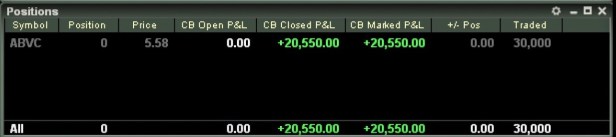
Day traders are everyday folk who enter the market specifically to trade stocks that are moving on momentum. Rarely ever do day traders give two rips about the company they are buying stock in, as they are there to ride the stock’s surge in value and move onto the next.
Day traders find their targets through the use of scanners, software that can be set up to scan the entire market based on specific parameters set up by the trader. In most instances, traders will be looking for stocks that are heavy on volume, have a low “float” (the amount of shares that are tradable by retail investors) and are moving based on some form of news. This could be something as vague as a “positive phase 1 clinical trial” in a biotech company or a positive earnings report. Traders will then use charts to measure previous levels of support and resistance, as well as any historical data that may come in handy if a stock really starts to spike.
In some instances, a news headline will be favorable enough to spike the share price higher for days on end, but day traders rarely hold any of their trades long term. The whole point of day trading the market is to get in, get out and move on with their day. Traders who hold stocks longer term are known as “swing traders,” which can be another effective way to make money in the market but is not how day traders typically operate.
The best practice, in my opinion, is to close out all of your trades and move on when you are happy. The last thing you want to have happen is to give back all of your profit overnight when a company that has just had a major surge in value drops an offering after hours that cuts the share price in half before you can cut the loss. I’ve been there.
 stadhotrading.com